

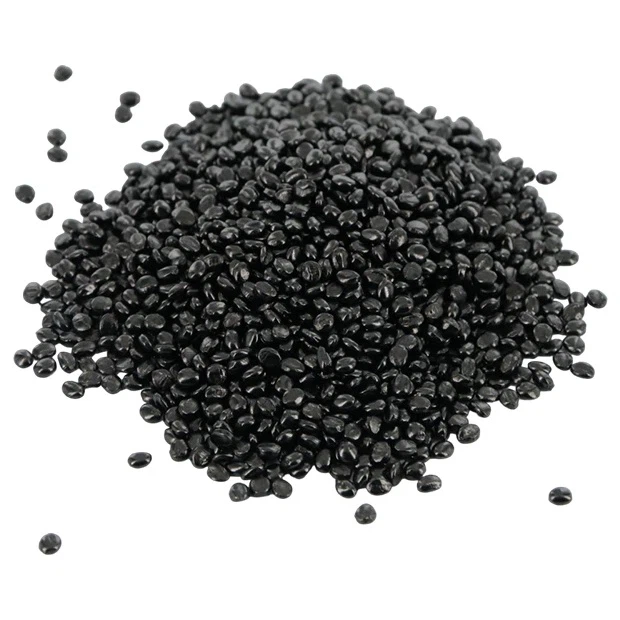
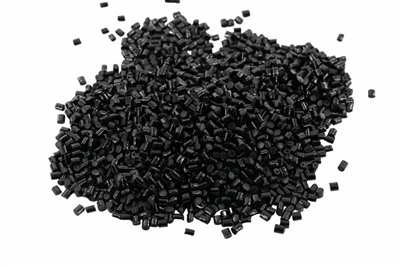

Black masterbatch plays a crucial role in the automotive industry, not only for its aesthetic appeal but also for its various electrical properties. As a leading supplier of Black Masterbatch for Automotive, we have in - depth knowledge of these properties and their significance in automotive applications.
Electrical Conductivity
One of the primary electrical properties of black masterbatch for automotive is its electrical conductivity. Carbon black, a key component in black masterbatch, can be engineered to provide different levels of conductivity. In automotive applications, static electricity can be a significant problem. For example, in fuel systems, the build - up of static charge can lead to dangerous sparks, which may cause fires or explosions. Conductive black masterbatch can dissipate static charges, ensuring the safety of the vehicle's fuel system.
The conductivity of black masterbatch is determined by several factors, including the type of carbon black used, its structure, and the dispersion within the polymer matrix. High - structure carbon blacks, such as those with a large number of interconnected particles, tend to provide better conductivity. Additionally, proper dispersion of carbon black in the masterbatch is essential to form a continuous conductive network. If the carbon black is not well - dispersed, the conductivity will be significantly reduced.
In automotive interior components, conductive black masterbatch can also be used to prevent electrostatic discharge (ESD). This is particularly important in modern vehicles, which are filled with sensitive electronic devices. When a person gets in or out of the vehicle, static charges can build up on their body and discharge when they touch a metal part of the car. This discharge can potentially damage the vehicle's electronic systems. By using conductive black masterbatch in interior plastics, such as dashboard components and door panels, the static charge can be safely dissipated.
Dielectric Properties
The dielectric properties of black masterbatch are also important in automotive applications. The dielectric constant and dielectric loss factor are two key parameters that describe these properties. The dielectric constant is a measure of a material's ability to store electrical energy in an electric field, while the dielectric loss factor represents the energy dissipated as heat when an alternating electric field is applied.
In automotive electrical insulation applications, a low dielectric constant and low dielectric loss factor are desirable. For example, in wiring harnesses and connectors, the insulation material needs to have good dielectric properties to prevent electrical leakage and energy loss. Black masterbatch can be formulated to meet these requirements. By carefully selecting the polymer carrier and carbon black type, we can control the dielectric properties of the masterbatch.
Some polymers, such as polyethylene and polypropylene, have inherently low dielectric constants and are commonly used as carriers in black masterbatch for electrical insulation applications. The addition of carbon black needs to be carefully controlled to ensure that it does not significantly increase the dielectric loss factor. If too much carbon black is added, it can increase the conductivity and also the dielectric loss, which is not desirable for insulation purposes.
Electrical Resistance
Electrical resistance is another important electrical property of black masterbatch. It is the reciprocal of conductivity and is measured in ohms. In automotive applications, the electrical resistance of black masterbatch can be tailored to meet specific requirements.
For example, in automotive sensors, different levels of electrical resistance may be needed to accurately measure various physical quantities, such as temperature, pressure, or humidity. By adjusting the amount and type of carbon black in the masterbatch, we can achieve a wide range of electrical resistances.
In some cases, a high - resistance black masterbatch may be used as an electrical insulator, while in other cases, a low - resistance masterbatch may be used for conductive applications. Our PS Black Masterbatch can be customized to have different electrical resistances, depending on the specific needs of the automotive application.
Influence of Processing Conditions
The electrical properties of black masterbatch can also be influenced by processing conditions. During the manufacturing process of automotive components, factors such as temperature, pressure, and shear rate can affect the dispersion of carbon black and the final electrical properties of the product.


High processing temperatures can cause the carbon black to agglomerate, which can reduce the conductivity of the masterbatch. Therefore, it is important to control the processing temperature within a suitable range. Similarly, high shear rates during extrusion or injection molding can break up the carbon black agglomerates and improve the dispersion, leading to better electrical properties.
Our No Carrier Black Masterbatch offers more flexibility in processing, as it can be easily incorporated into different polymers. This allows manufacturers to optimize the processing conditions to achieve the desired electrical properties.
Quality Control and Testing
To ensure the consistent electrical properties of our black masterbatch for automotive applications, we have a rigorous quality control and testing process. We use advanced testing equipment, such as conductivity meters, dielectric analyzers, and resistance testers, to measure the electrical properties of our masterbatch.
Each batch of masterbatch is tested before it is shipped to our customers. We also conduct long - term stability tests to ensure that the electrical properties of the masterbatch do not change over time. This is particularly important in automotive applications, where the components need to perform reliably over the vehicle's lifetime.
Conclusion and Call to Action
In conclusion, the electrical properties of black masterbatch for automotive are complex and can be tailored to meet a wide range of applications. From conductivity for ESD protection to dielectric properties for insulation, our black masterbatch offers solutions for various automotive electrical needs.
As a trusted supplier of black masterbatch for the automotive industry, we are committed to providing high - quality products with consistent electrical properties. If you are in the automotive manufacturing business and are looking for a reliable source of black masterbatch, we invite you to contact us for more information and to discuss your specific requirements. Our team of experts is ready to assist you in finding the perfect black masterbatch solution for your automotive applications.
References
- Handbook of Carbon Black, Second Edition, edited by Donato F. De Angelis
- Plastics Additives Handbook, 6th Edition, edited by Hans Zweifel
- Automotive Electrical and Electronic Systems, Third Edition, by William H. Crouse and Donald L. Anglin