

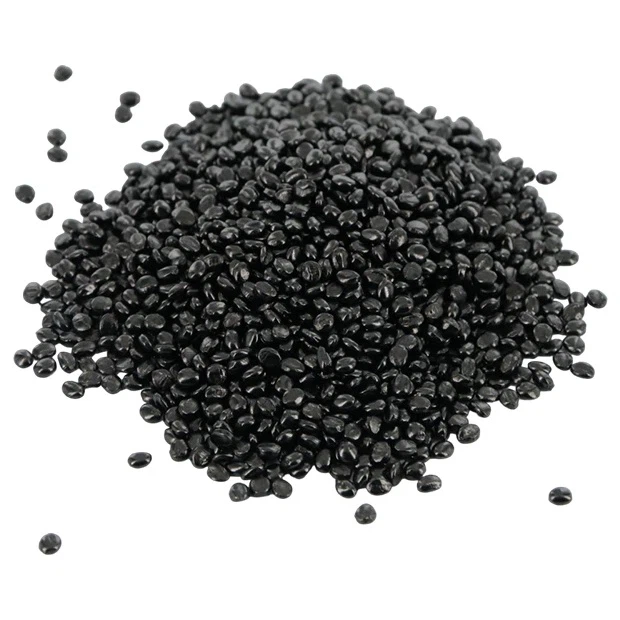
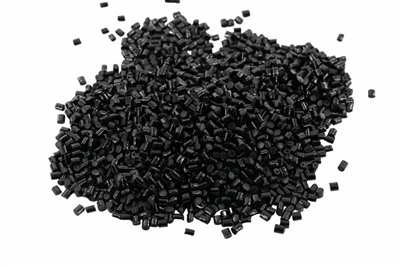

In the field of plastic injection molding, the heat transfer performance of resin with black masterbatch is a crucial factor that significantly impacts the quality and efficiency of the final products. As a dedicated supplier of black masterbatch for injection, I've witnessed firsthand how various factors can influence this heat transfer process. In this blog, I'll delve into the key elements that play a role in the heat transfer of resin with black masterbatch for injection.
1. Composition of Black Masterbatch
The composition of black masterbatch is one of the primary factors affecting heat transfer. Black masterbatch typically consists of a carrier resin, carbon black pigment, and various additives.
Carbon Black Pigment
Carbon black is the main coloring agent in black masterbatch. Its properties, such as particle size, structure, and surface area, have a profound impact on heat transfer. Smaller particle - sized carbon black has a larger surface area, which can enhance the absorption and conduction of heat. This is because a larger surface area provides more contact points for heat exchange between the carbon black and the resin matrix. For example, high - structure carbon black with a complex branching network can form a more efficient heat - conducting path within the resin. As heat is transferred through the resin, the carbon black particles act as conduits, facilitating the movement of thermal energy.
Carrier Resin
The type of carrier resin used in the black masterbatch also matters. Different carrier resins have different thermal conductivities. For instance, polyolefin - based carrier resins like polyethylene (PE) and polypropylene (PP) have relatively low thermal conductivities compared to engineering plastics such as polycarbonate (PC) or polyamide (PA). When the carrier resin has a low thermal conductivity, it can act as a barrier to heat transfer, slowing down the rate at which heat is dissipated from the injection - molded part. On the other hand, using a carrier resin with a higher thermal conductivity can improve the overall heat transfer performance of the resin - black masterbatch system.
Additives
Additives in black masterbatch, such as dispersants, antioxidants, and lubricants, can also affect heat transfer. Dispersants help to evenly distribute the carbon black particles in the carrier resin. A well - dispersed carbon black system ensures a more uniform heat - conducting network. If the carbon black particles are agglomerated, the heat transfer efficiency will be reduced as there will be fewer continuous paths for heat to flow. Antioxidants can prevent the degradation of the resin and carbon black at high temperatures during the injection molding process. This is important because degraded materials may have different thermal properties, which can disrupt the normal heat transfer process. Lubricants, while mainly used to improve the flowability of the masterbatch, can also have an impact on heat transfer. They can reduce the friction between the resin and the mold surface, which may affect the heat transfer at the interface.
2. Processing Conditions
The processing conditions during injection molding have a significant influence on the heat transfer of resin with black masterbatch.
Melt Temperature
The melt temperature of the resin - black masterbatch mixture is a critical factor. When the melt temperature is too low, the resin may not flow properly, and the carbon black particles may not be well - dispersed. This can lead to uneven heat transfer within the molded part. On the other hand, if the melt temperature is too high, the resin may degrade, and the properties of the carbon black may change. High - temperature degradation can cause the carbon black to lose its structure, reducing its ability to conduct heat. Therefore, it is essential to maintain an optimal melt temperature to ensure efficient heat transfer. This temperature is usually determined by the type of resin and the specific requirements of the injection - molding process.
Injection Speed
The injection speed affects how the resin - black masterbatch mixture fills the mold cavity. A high injection speed can cause turbulent flow within the mold, which may disrupt the formation of a uniform heat - conducting network. This is because the rapid movement of the molten material can cause the carbon black particles to be randomly distributed, rather than forming an ordered heat - conducting path. In contrast, a lower injection speed allows the resin to flow more smoothly, promoting better alignment of the carbon black particles and more efficient heat transfer. However, if the injection speed is too low, it can lead to longer cycle times and potential issues with part quality, such as incomplete filling.
Mold Temperature
The mold temperature plays a vital role in heat transfer. A higher mold temperature can slow down the cooling rate of the injected resin, allowing more time for the heat to be evenly distributed within the part. This can be beneficial for improving the internal structure of the molded part and enhancing heat transfer. Conversely, a low mold temperature can cause rapid cooling, which may result in thermal gradients within the part. These gradients can lead to internal stresses and uneven heat transfer, potentially causing warping or other defects in the final product.
3. Resin Properties
The properties of the base resin used in combination with the black masterbatch also have a significant impact on heat transfer.
Thermal Conductivity of the Resin
As mentioned earlier, different resins have different thermal conductivities. For example, thermoplastics like acrylonitrile - butadiene - styrene (ABS) have a relatively low thermal conductivity compared to some thermosetting resins. When using a resin with low thermal conductivity, the overall heat transfer performance of the resin - black masterbatch system will be limited. To improve heat transfer, one option is to blend the base resin with a small amount of a high - thermal - conductivity resin or use fillers that can enhance thermal conductivity.
Viscosity of the Resin
The viscosity of the resin affects the dispersion of the black masterbatch and the flow of the molten material during injection molding. A resin with high viscosity may make it more difficult to disperse the carbon black particles evenly. This can lead to poor heat transfer as the uneven distribution of carbon black will result in a non - uniform heat - conducting network. On the other hand, a resin with very low viscosity may cause the carbon black particles to settle or migrate during the injection process, also affecting heat transfer. Therefore, it is important to select a resin with an appropriate viscosity for the specific injection - molding application.
4. Part Geometry
The geometry of the injection - molded part can influence heat transfer.
Thickness of the Part
Thicker parts generally have a slower heat - transfer rate compared to thinner parts. This is because heat has to travel a longer distance through the material in a thicker part. In a thick - walled part, the center of the part may cool much more slowly than the outer surface, leading to non - uniform heat transfer and potential internal stresses. To address this issue, additional cooling channels or other cooling methods may be required to ensure more even heat dissipation.
Shape of the Part
Complex part shapes can also pose challenges to heat transfer. Parts with sharp corners, thin ribs, or large cavities may have areas where heat transfer is restricted. For example, in a part with sharp corners, the flow of the molten resin may be disrupted, leading to poor dispersion of the black masterbatch and uneven heat transfer. In such cases, special attention needs to be paid to the design of the mold and the injection - molding process to ensure that heat is transferred evenly throughout the part.
Exploring Our Black Masterbatch Products
As a supplier of black masterbatch for injection, we offer a wide range of high - quality products suitable for various applications. Our Black Masterbatch for Garbage Bag is specifically formulated to meet the requirements of garbage bag production. It provides excellent heat - transfer properties, ensuring efficient injection molding and high - quality bags.
For extrusion applications, our Black Masterbatch for Extrusion is designed to work seamlessly with different extrusion processes. It helps to achieve uniform heat transfer, resulting in smooth and consistent extruded products.
If you are involved in stretch film production, our Black Masterbatch for Strech Film is the ideal choice. It enhances the heat - transfer performance of the resin, improving the quality and stretchability of the film.
Conclusion and Call to Action
In conclusion, the heat transfer of resin with black masterbatch for injection is affected by multiple factors, including the composition of the black masterbatch, processing conditions, resin properties, and part geometry. Understanding these factors is crucial for optimizing the injection - molding process and achieving high - quality products.
If you are looking for a reliable supplier of black masterbatch for injection, we are here to help. Our team of experts can provide you with customized solutions based on your specific requirements. Contact us today to start a discussion about your needs and explore how our black masterbatch products can enhance your injection - molding process.


References
- Choi, H. J., & Kim, J. H. (2018). Thermal conductivity of polymer composites filled with carbon - based nanofillers. Progress in Polymer Science, 83, 1 - 28.
- Osswald, T. A., & Turng, L. S. (2003). Injection Molding Handbook. Hanser Publishers.
- Zhang, L., & Li, Y. (2015). Effects of processing parameters on the thermal properties of injection - molded thermoplastic composites. Journal of Reinforced Plastics and Composites, 34(11), 945 - 956.