

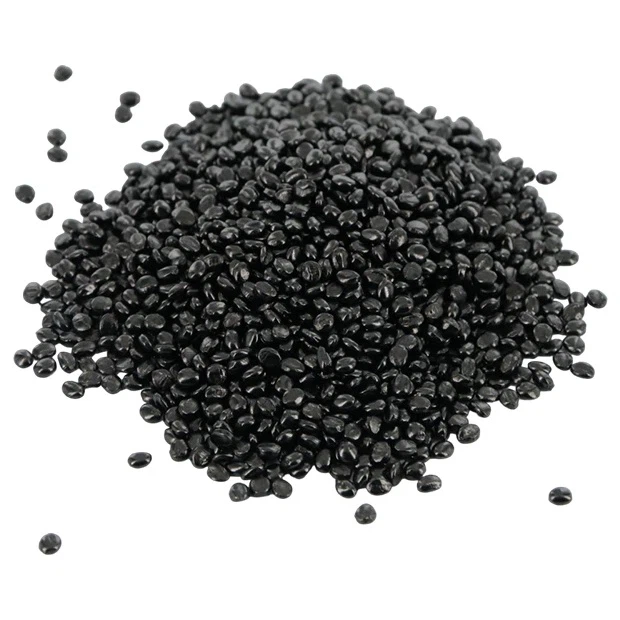
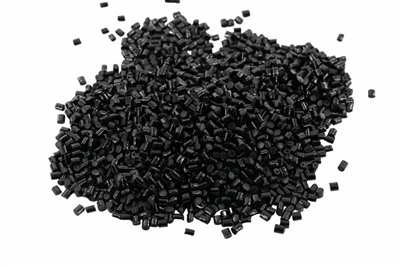

Hey there! As a supplier of pp black masterbatch, I've been deeply involved in this industry for quite some time. In this blog, I'm gonna share with you the research and development directions for pp black masterbatch.
1. Environmental - Friendliness
In today's world, environmental protection is a hot topic. Consumers are becoming more and more conscious about the environmental impact of the products they use. So, one of the major R & D directions for pp black masterbatch is to make it more eco - friendly.
We're looking into using natural and sustainable raw materials. For example, instead of some traditional carbon black sources that might have a relatively high environmental footprint, we can explore the use of bio - based carbon black. This kind of carbon black can be derived from renewable resources like biomass. It not only reduces the dependence on fossil fuels but also has a lower carbon footprint during production.
Another aspect is to reduce the amount of volatile organic compounds (VOCs) emitted by the pp black masterbatch. VOCs can be harmful to the environment and human health. By improving the production process and formulating new recipes, we can minimize the release of these harmful substances. For instance, using better dispersion techniques and high - quality additives can help in achieving a more stable and less volatile masterbatch.


2. High - Performance Requirements
The market is always demanding better - performing products. In the case of pp black masterbatch, high - performance features are crucial.
Enhanced Dispersion
Good dispersion of carbon black in the polypropylene matrix is essential. When the carbon black particles are well - dispersed, the masterbatch can provide more uniform color and better physical properties to the final product. We're researching new dispersion agents and processing methods to achieve this. For example, ultrasonic dispersion technology can be used during the production of the masterbatch. This technology can break up the carbon black agglomerates more effectively, resulting in a more homogeneous distribution of carbon black in the polypropylene.
Improved Heat Resistance
Many applications of pp black masterbatch require good heat resistance. For example, in automotive parts or electrical appliances, the products may be exposed to high temperatures. By adding heat - resistant additives and optimizing the formulation of the masterbatch, we can enhance its heat - resistant properties. Some heat - resistant polymers or inorganic fillers can be incorporated into the masterbatch to improve its thermal stability.
Increased UV Resistance
When the products made with pp black masterbatch are used outdoors, they are exposed to sunlight, especially ultraviolet (UV) rays. UV rays can cause degradation of the polypropylene, leading to color fading and reduced mechanical properties. We're working on developing masterbatches with better UV - resistant capabilities. Adding UV stabilizers and antioxidants to the masterbatch can protect the polypropylene from UV - induced degradation. For example, hindered amine light stabilizers (HALS) are commonly used to improve the UV resistance of polymers.
3. Customization
Different customers have different needs. That's why customization is an important R & D direction for pp black masterbatch.
Color Customization
Besides the standard black color, some customers may require specific shades of black or even special color effects. We can adjust the type and amount of carbon black, as well as add other colorants to achieve different color tones. For example, if a customer wants a more bluish - black color, we can use a combination of different carbon blacks or add a small amount of blue colorant.
Function - Based Customization
Some customers may need pp black masterbatch with specific functions. For example, in the packaging industry, there may be a need for anti - static masterbatch. By adding anti - static agents to the pp black masterbatch, we can meet this requirement. In the agricultural film industry, masterbatch with anti - fogging or anti - dripping functions can be developed according to the customers' needs.
4. Compatibility with Other Materials
In many applications, pp black masterbatch needs to be used in combination with other materials. So, improving its compatibility with other polymers and additives is an important R & D area.
Compatibility with Engineering Plastics
When pp black masterbatch is used in blends with engineering plastics like PA Black Masterbatch, ABS Black Masterbatch, and PS Black Masterbatch, good compatibility is necessary. By using compatibilizers and adjusting the surface properties of the carbon black, we can ensure a better interaction between the pp black masterbatch and these engineering plastics. This can lead to improved mechanical properties and a more stable blend.
Compatibility with Additives
There are various additives used in the plastic industry, such as flame retardants, plasticizers, and impact modifiers. The pp black masterbatch should be compatible with these additives. Research is being done to understand the chemical reactions and interactions between the masterbatch and these additives. By optimizing the formulation, we can avoid any negative effects on the performance of the final product due to incompatibility.
5. Cost - Effectiveness
In the competitive market, cost - effectiveness is always a key factor. We're constantly looking for ways to reduce the production cost of pp black masterbatch without sacrificing its quality.
Raw Material Substitution
As mentioned earlier, using natural and sustainable raw materials can not only be environmentally friendly but also potentially reduce costs. Additionally, we can explore the use of some alternative raw materials that are more cost - effective. For example, some recycled carbon black or low - cost carbon black sources can be used as partial substitutes for high - quality carbon black, as long as they can still meet the performance requirements.
Process Optimization
By optimizing the production process, we can reduce energy consumption and waste. For example, using more efficient mixing equipment and shorter processing times can lower the production cost. Automation of the production line can also improve the production efficiency and reduce labor costs.
If you're interested in our pp black masterbatch or have any specific requirements, feel free to reach out to us for a detailed discussion. We're always ready to work with you to meet your needs and provide the best solutions.
References
- "Plastics Additives Handbook" by Hans Zweifel
- "Carbon Black: Science and Technology" by Donnet, Jean - B.; Bansal, Ramesh C.; Wang, Maowen