

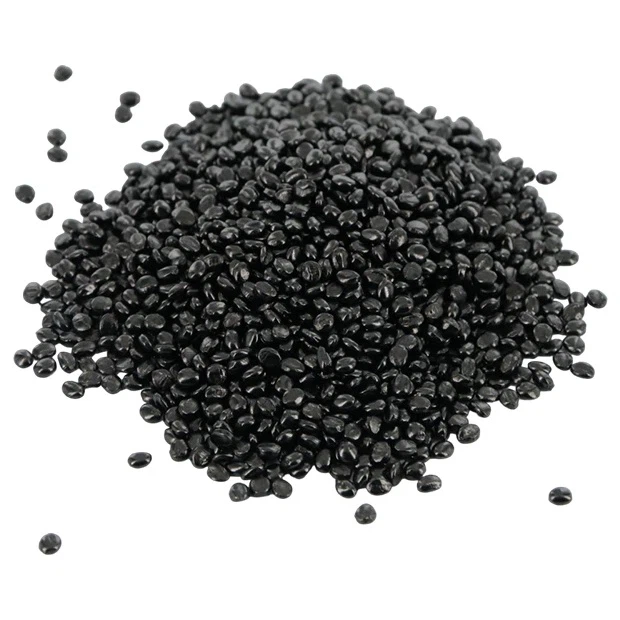
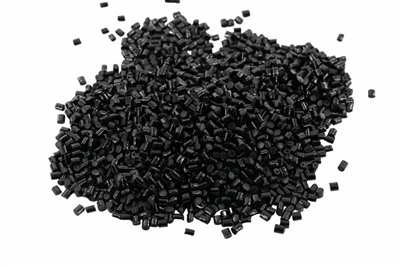

As a supplier of PS black masterbatch, I often encounter inquiries from customers about the standards for the fineness of our product. The fineness of PS black masterbatch is a crucial factor that can significantly impact the quality and performance of the final plastic products. In this blog post, I will delve into the standards for the fineness of PS black masterbatch, why it matters, and how we ensure our products meet the highest quality benchmarks.
Understanding the Concept of Fineness in PS Black Masterbatch
Fineness in PS black masterbatch refers to the particle size of the carbon black pigment and other additives within the masterbatch. The smaller the particle size, the finer the masterbatch. This fineness is typically measured in microns (μm). A finer masterbatch means that the carbon black particles are more evenly dispersed throughout the PS resin matrix, resulting in a more uniform color distribution and better overall performance.
Why Fineness Matters
The fineness of PS black masterbatch has several important implications for the end - use applications:


- Color Uniformity: Finer particles ensure a more consistent color throughout the plastic product. When the carbon black particles are uniformly dispersed, there are no visible color streaks or patches, which is especially important for high - end products where appearance is critical.
- Mechanical Properties: A well - dispersed, fine - particle masterbatch can have a positive impact on the mechanical properties of the plastic. It can improve the strength, toughness, and impact resistance of the PS product. Coarse particles may act as stress concentrators, leading to a reduction in mechanical performance.
- Processability: Finer masterbatch particles flow more easily during the plastic processing stage, such as injection molding or extrusion. This can result in better mold filling, fewer defects, and improved production efficiency.
Industry Standards for Fineness
There are no one - size - fits - all global standards for the fineness of PS black masterbatch, as different applications may require different levels of fineness. However, in general, the following guidelines are commonly followed:
- General - Purpose Applications: For most general - purpose PS products, a fineness of 1 - 10 microns is considered acceptable. This range provides a good balance between color uniformity, mechanical properties, and cost.
- High - End Applications: In applications where high - quality appearance and performance are required, such as in electronics or automotive parts, a fineness of less than 1 micron may be necessary. These ultra - fine masterbatches offer superior color dispersion and can enhance the overall aesthetics and performance of the final product.
Our Approach to Ensuring Fineness
As a supplier, we take several steps to ensure that our PS black masterbatch meets the highest standards of fineness:
- Raw Material Selection: We carefully select high - quality carbon black pigments with the appropriate particle size distribution. Our suppliers are required to provide detailed specifications regarding the particle size of the carbon black, and we conduct regular quality checks to ensure consistency.
- Advanced Manufacturing Processes: We use state - of - the - art mixing and dispersion equipment to break down the carbon black particles and distribute them evenly throughout the PS resin. Our manufacturing processes are carefully controlled to ensure that the particle size remains within the desired range.
- Quality Control: We have a comprehensive quality control system in place. Each batch of masterbatch is tested for fineness using advanced particle size analysis techniques, such as laser diffraction. Only products that meet our strict fineness standards are released for sale.
Comparing with Other Types of Black Masterbatch
It's also interesting to compare the fineness requirements of PS black masterbatch with those of other types of black masterbatch, such as No Carrier Black Masterbatch, PC Black Masterbatch, and PA Black Masterbatch.
- No Carrier Black Masterbatch: This type of masterbatch typically requires a high level of fineness, as it is often used in applications where a very pure and concentrated black color is needed. The fineness requirements can be similar to those of high - end PS black masterbatch, with a focus on achieving a uniform color and excellent dispersion.
- PC Black Masterbatch: Polycarbonate (PC) has different processing characteristics compared to PS. PC black masterbatch may require a specific fineness range to ensure good compatibility and dispersion within the PC resin. Generally, a fineness of 0.5 - 5 microns is common for PC applications.
- PA Black Masterbatch: Polyamide (PA) is a semi - crystalline polymer, and the fineness of PA black masterbatch can affect its crystallization behavior. For PA applications, a fineness of 1 - 5 microns is often preferred to balance color performance and mechanical properties.
Conclusion
The fineness of PS black masterbatch is a critical factor that can have a significant impact on the quality, performance, and appearance of the final plastic product. By understanding the industry standards and taking appropriate measures to ensure fineness, we can provide our customers with high - quality masterbatch that meets their specific needs.
If you are in the market for PS black masterbatch and have questions about fineness or other quality aspects, we invite you to contact us. Our team of experts is ready to assist you in selecting the right product for your application and to discuss how our masterbatch can enhance the performance of your plastic products. Whether you are a small - scale manufacturer or a large - scale industrial enterprise, we are committed to providing you with the best solutions.
References
- "Plastics Additives Handbook" by Hans Zweifel
- "Handbook of Carbon Black" by Robert A. Donnet, Manoël Langlois, and Marc - Michel Wang