

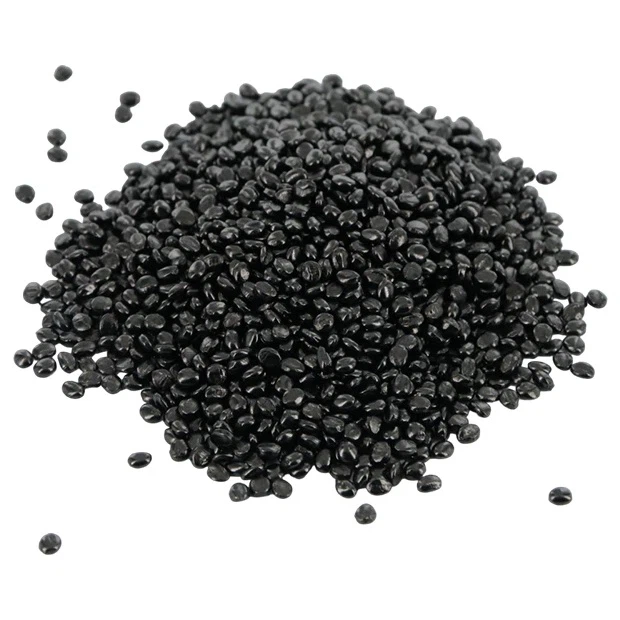
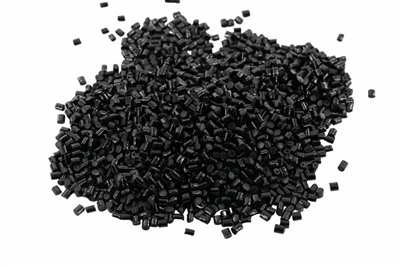

Hey there! As a supplier of no carrier black masterbatch, I often get asked about its compatibility with different polymers. It's a super important topic, especially for those in the plastics industry. So, let's dive right in and explore this in detail.
What is No Carrier Black Masterbatch?
First off, let's quickly talk about what no carrier black masterbatch is. It's a concentrated form of carbon black that doesn't have a carrier resin. This makes it a versatile option for various applications. The absence of a carrier resin allows it to be easily incorporated into different polymers, providing excellent coloration and other performance benefits.
Compatibility with Polyethylene (PE)
Polyethylene is one of the most widely used polymers in the world. It comes in different types, such as high - density polyethylene (HDPE) and low - density polyethylene (LDPE). No carrier black masterbatch has great compatibility with PE.
When added to PE, the carbon black in the masterbatch disperses well, giving a uniform black color. In HDPE, which is known for its high strength and stiffness, the no carrier black masterbatch can enhance the UV resistance. This is crucial for products like pipes, containers, and outdoor furniture that are exposed to sunlight.
For LDPE, which is more flexible, the masterbatch doesn't affect its flexibility. Instead, it provides a rich black color, making it suitable for products like plastic bags and films. The good compatibility means that there are no issues with delamination or uneven color distribution, which could be a problem with some other masterbatch types.
Compatibility with Polypropylene (PP)
Polypropylene is another popular polymer, commonly used in automotive parts, packaging, and textiles. No carrier black masterbatch works really well with PP.
The carbon black in the masterbatch can improve the electrical conductivity of PP to some extent. This is useful in applications where static electricity needs to be dissipated, like in electronic packaging. In terms of color, it gives a deep, jet - black appearance to PP products.
During the processing of PP, the no carrier black masterbatch can be easily mixed with the polymer. It doesn't cause any significant changes in the melt flow index of PP, which is important for maintaining the processing efficiency. Whether it's injection molding or extrusion, the masterbatch performs consistently, ensuring high - quality finished products.
Compatibility with Polystyrene (PS)
Polystyrene is known for its transparency and rigidity. When it comes to using no carrier black masterbatch with PS, it can transform the appearance of PS products.
If you're interested in PS Black Masterbatch, you'll find that the no carrier version can be a great choice. It can be used to create black PS products with excellent surface finish. For example, in the production of disposable cutlery or CD cases, the masterbatch provides a uniform black color without affecting the mechanical properties of PS too much.
The compatibility is such that the masterbatch doesn't cause any cloudiness or brittleness in PS. This is important because PS is often used for products where clarity and strength are both required.
Compatibility with Polycarbonate (PC)
Polycarbonate is a high - performance polymer known for its transparency, impact resistance, and heat resistance. No carrier black masterbatch can be used with PC to create black - colored products while maintaining some of its key properties.
PC Black Masterbatch is a specialized area, and the no carrier version has its advantages. It can be carefully incorporated into PC to achieve a black color without sacrificing too much of the transparency if that's a concern. In applications like automotive headlamp covers or electronic device housings, the masterbatch can provide a sleek black look while still allowing some light transmission if needed.
The key is to ensure proper dispersion during the compounding process. When done right, the no carrier black masterbatch can work in harmony with PC, resulting in high - quality, durable products.
Factors Affecting Compatibility
While no carrier black masterbatch generally has good compatibility with many polymers, there are a few factors that can affect it.
One factor is the particle size of the carbon black. Finer particles tend to disperse better in polymers, leading to more uniform color and better compatibility. The surface treatment of the carbon black also matters. Some surface treatments can improve the interaction between the carbon black and the polymer, enhancing the overall compatibility.
The processing conditions are also crucial. Temperature, shear rate, and mixing time during the compounding process can all impact how well the masterbatch and the polymer blend. If the processing conditions are too harsh or not optimized, it could lead to poor dispersion and reduced compatibility.
Benefits of Using No Carrier Black Masterbatch
There are several benefits to using no carrier black masterbatch. Firstly, it offers more flexibility in terms of polymer selection. Since it doesn't have a carrier resin, it can be used with a wider range of polymers compared to carrier - based masterbatches.
It also allows for more precise control over the properties of the final product. For example, you can adjust the amount of masterbatch added to achieve the desired level of color intensity, UV resistance, or electrical conductivity.
In terms of cost - effectiveness, no carrier black masterbatch can be a great option. You're essentially paying for the active ingredient (carbon black) without the additional cost of a carrier resin. This can lead to significant savings, especially for large - scale production.
Conclusion
In conclusion, no carrier black masterbatch has excellent compatibility with a wide range of polymers, including PE, PP, PS, and PC. It offers numerous benefits in terms of coloration, performance enhancement, and cost - effectiveness.


If you're in the market for high - quality No Carrier Black Masterbatch, look no further. Whether you're a small - scale manufacturer or a large - scale industrial producer, we can provide you with the right solution for your polymer coloring needs.
If you have any questions or are interested in discussing your specific requirements, feel free to reach out. We're here to help you make the best choice for your business.
References
- X. Zhang, "Polymer Compounding and Masterbatch Technology", 2018.
- Y. Wang, "Carbon Black Applications in Polymers", 2019.
- Z. Liu, "Compatibility Studies of Masterbatches with Different Polymers", 2020.