

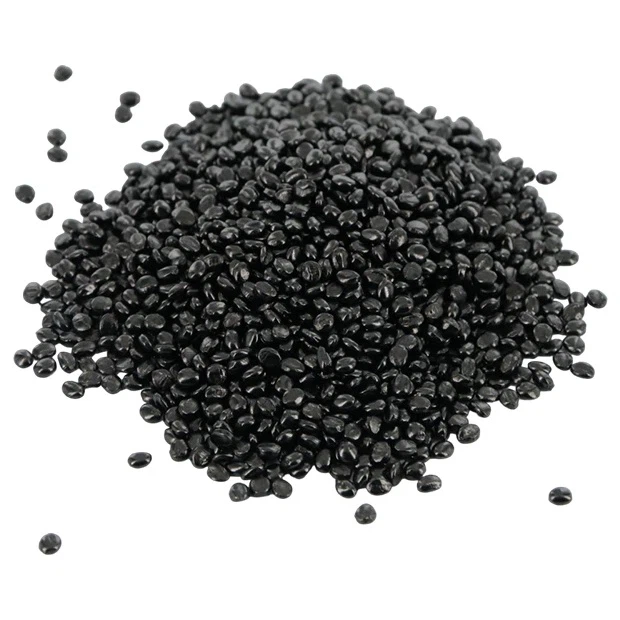
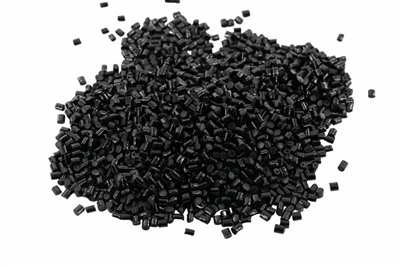

In the manufacturing of garbage bags, black masterbatch plays a crucial role. As a dedicated supplier of black masterbatch for garbage bags, I've witnessed firsthand the importance of understanding the differences between different grades of black masterbatch. This knowledge can significantly impact the quality, performance, and cost - effectiveness of garbage bags. In this blog, I'll delve into these differences to help you make more informed decisions when it comes to sourcing black masterbatch for your garbage bag production.
1. Pigment Concentration
One of the primary differences between different grades of black masterbatch is the pigment concentration. Higher - grade black masterbatch typically contains a higher percentage of carbon black pigment. Carbon black is the key ingredient that gives the garbage bags their characteristic black color.
For lower - grade masterbatch, the pigment concentration might be around 20% - 30%. These are often more cost - effective options. However, they may require a larger amount to be added to the base resin during the manufacturing process to achieve the desired black color. This can lead to potential issues such as uneven dispersion, which might result in streaks or patches on the garbage bags.
On the other hand, high - grade black masterbatch can have a pigment concentration of up to 50% or even higher. With a higher pigment concentration, less masterbatch needs to be added to the resin. This not only reduces the overall cost of adding the colorant but also ensures a more uniform and intense black color. The high - grade masterbatch also has better dispersion properties, which means that the carbon black particles are evenly distributed throughout the resin, resulting in a consistent appearance across the entire garbage bag.
2. Dispersion Quality
Dispersion quality is another critical factor that differentiates various grades of black masterbatch. Good dispersion is essential because it affects the physical properties and appearance of the garbage bags.
Lower - grade masterbatch may have poor dispersion characteristics. The carbon black particles in these masterbatches may clump together instead of being evenly spread throughout the resin. This can lead to weak spots in the garbage bags, reducing their strength and durability. Additionally, poor dispersion can cause surface irregularities, making the bags look less aesthetically pleasing.
High - grade black masterbatch is formulated with advanced dispersion technology. Special additives are used to ensure that the carbon black particles are well - separated and uniformly distributed in the resin matrix. This results in garbage bags with consistent mechanical properties, such as tear resistance and puncture resistance. The bags also have a smooth and uniform surface finish, which is important for both functionality and consumer appeal.
3. UV Resistance
Garbage bags are often exposed to sunlight, which contains ultraviolet (UV) rays. Over time, UV rays can cause the degradation of the plastic material, leading to brittleness, discoloration, and reduced strength. Different grades of black masterbatch offer varying levels of UV resistance.
Lower - grade masterbatch usually has limited UV protection. These masterbatches may not contain sufficient UV stabilizers, which means that the garbage bags made with them are more likely to deteriorate when exposed to sunlight for extended periods. This can be a significant problem, especially for outdoor garbage bags that are left in the sun for days.
High - grade black masterbatch, however, is formulated with high - performance UV stabilizers. These stabilizers absorb and dissipate the UV energy, protecting the plastic from degradation. Garbage bags made with high - grade masterbatch can withstand prolonged exposure to sunlight without significant loss of strength or color. This makes them a better choice for outdoor use, where they are constantly exposed to the elements.
4. Compatibility with Resins
Garbage bags are typically made from different types of resins, such as polyethylene (PE). The compatibility of the black masterbatch with the resin is crucial for achieving optimal performance.
Lower - grade masterbatch may have limited compatibility with certain resins. When added to the resin, it may not blend well, resulting in phase separation or poor adhesion. This can lead to problems such as delamination or reduced mechanical properties in the garbage bags.
High - grade black masterbatch is designed to be highly compatible with a wide range of resins. It has been thoroughly tested to ensure that it can be easily incorporated into the resin during the manufacturing process. This compatibility ensures that the masterbatch and the resin work together seamlessly, resulting in garbage bags with excellent physical and chemical properties.
5. Cost - Performance Ratio
Cost is always a significant consideration in any manufacturing process. Lower - grade black masterbatch is generally less expensive than high - grade masterbatch. However, when evaluating the cost, it's important to consider the performance and the overall cost - effectiveness.
Although lower - grade masterbatch has a lower upfront cost, it may require a higher dosage to achieve the desired color and performance. This can increase the overall cost of production. Additionally, the lower quality of lower - grade masterbatch may result in a higher rate of defective products, which further adds to the cost.
High - grade black masterbatch, while more expensive initially, offers better performance in terms of color, dispersion, UV resistance, and compatibility. It requires a lower dosage, which can offset the higher cost per unit. Moreover, the lower defect rate and longer lifespan of the garbage bags made with high - grade masterbatch can lead to significant cost savings in the long run.
Applications in Different Garbage Bag Types
The choice of black masterbatch grade also depends on the type of garbage bags being produced. For example, Black Masterbatch for PP Tableware may have different requirements compared to regular garbage bags. PP tableware requires a masterbatch that is food - contact safe and has excellent heat resistance.
Similarly, Black Masterbatch For Film Blown is used in the production of garbage bags through the film - blowing process. This type of masterbatch needs to have good melt - flow properties and dispersion to ensure a smooth and uniform film.
For applications where the garbage bags may come into contact with food, Food Contact Black Masterbatch is essential. This grade of masterbatch is formulated to meet strict food - safety regulations and has low levels of migration of harmful substances.


Conclusion
In conclusion, the differences between different grades of black masterbatch for garbage bags are significant and can have a profound impact on the quality, performance, and cost - effectiveness of the final product. As a supplier, I understand the importance of providing the right grade of masterbatch to meet the specific needs of our customers.
Whether you are looking for a cost - effective solution for general - purpose garbage bags or a high - performance masterbatch for specialized applications, we have the expertise and the product range to meet your requirements. By choosing the appropriate grade of black masterbatch, you can ensure that your garbage bags have the best possible color, strength, durability, and UV resistance.
If you are interested in learning more about our black masterbatch products or would like to discuss your specific requirements, please feel free to contact us. We are always ready to assist you in finding the perfect solution for your garbage bag production.
References
- "Plastics Additives Handbook" by Hans Zweifel
- "Polymer Science and Technology" by Joel R. Fried
- Industry reports on black masterbatch production and application in the plastic industry