

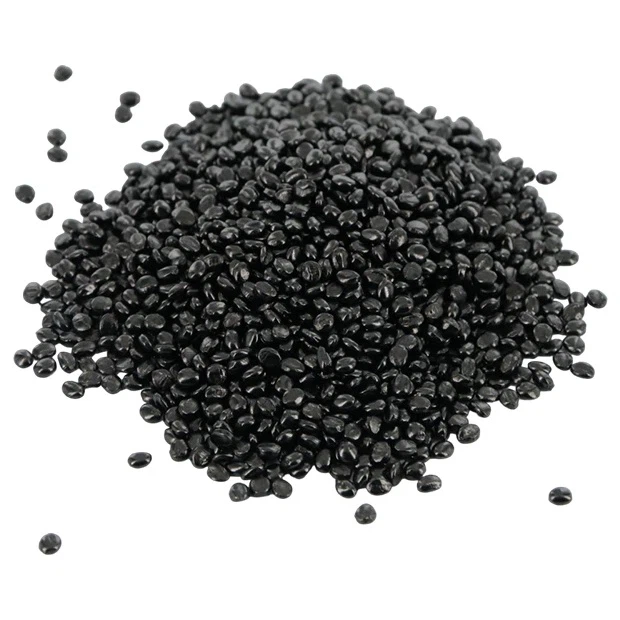
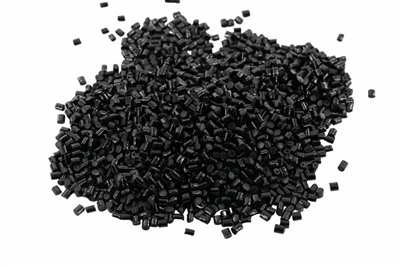

As a supplier of black masterbatch for foaming, I often encounter inquiries about the fatigue resistance of foamed products made with our masterbatch. Fatigue resistance is a critical property, especially in applications where the foamed products are subjected to repeated stress or deformation over time. In this blog, I will delve into what fatigue resistance means for foamed products with black masterbatch for foaming, the factors that influence it, and how our product can contribute to enhancing this important characteristic.
Understanding Fatigue Resistance in Foamed Products
Fatigue resistance refers to the ability of a material to withstand cyclic loading without failure. In the context of foamed products, this means that the foam can endure repeated compression, stretching, or bending without losing its structural integrity or mechanical properties. For example, in automotive seating, the foam needs to resist fatigue from the constant sitting and getting up of passengers. In packaging applications, the foam should be able to withstand multiple drops or impacts during transportation without breaking down.
The fatigue resistance of foamed products is influenced by several factors, including the foam's cell structure, the type and amount of additives, and the base polymer. The cell structure plays a crucial role in determining how the foam distributes stress. A uniform and fine cell structure can help to evenly disperse the load, reducing the concentration of stress at specific points and thus improving fatigue resistance.
The Role of Black Masterbatch for Foaming
Our black masterbatch for foaming is not just about providing color; it also has a significant impact on the fatigue resistance of the foamed products. The carbon black in the masterbatch acts as a reinforcing agent, enhancing the mechanical properties of the foam. Carbon black particles can improve the foam's stiffness and strength, which in turn contributes to better fatigue resistance.
Moreover, our black masterbatch is formulated to be compatible with a wide range of base polymers used in foaming processes. This compatibility ensures that the masterbatch can be evenly dispersed throughout the polymer matrix, creating a homogeneous foam structure. A well - dispersed masterbatch helps to maintain the integrity of the cell structure during cyclic loading, preventing premature failure of the foam.
Factors Affecting Fatigue Resistance in Foamed Products with Black Masterbatch
Cell Structure
The cell structure of the foam is closely related to the foaming process and the formulation of the masterbatch. A proper foaming agent and the right amount of black masterbatch are essential for achieving an optimal cell structure. If the cell size is too large or the cell distribution is uneven, the foam will be more prone to stress concentration and fatigue failure. Our black masterbatch is designed to work in harmony with different foaming agents to promote the formation of a fine and uniform cell structure.
Additive Concentration
The amount of black masterbatch added to the polymer matrix also affects fatigue resistance. While a certain amount of carbon black can enhance the mechanical properties of the foam, an excessive amount may lead to agglomeration of the particles, which can weaken the foam structure and reduce fatigue resistance. We have conducted extensive research to determine the optimal concentration of our black masterbatch for different applications, ensuring that the foamed products achieve the best balance between color, mechanical properties, and fatigue resistance.
Base Polymer
Different base polymers have different inherent fatigue resistance characteristics. For example, polyurethane foams are known for their good flexibility and resilience, while polyethylene foams are more rigid. Our black masterbatch is suitable for a variety of base polymers, including [list some common polymers]. By choosing the appropriate base polymer and combining it with our black masterbatch, manufacturers can tailor the fatigue resistance of the foamed products to meet specific application requirements.
Applications and the Importance of Fatigue Resistance
Automotive Industry
In the automotive industry, foamed products are widely used in seats, headrests, and door panels. These components are subjected to continuous loading and vibration during vehicle operation. A foamed product with high fatigue resistance can ensure long - term comfort and safety for passengers. Our black masterbatch for foaming can help automotive manufacturers produce foamed components that can withstand the rigors of daily use, reducing the need for frequent replacements.
Packaging Industry
In the packaging industry, foamed materials are used to protect fragile items during transportation. The foam needs to be able to absorb shocks and impacts multiple times without losing its cushioning properties. Our black masterbatch can enhance the fatigue resistance of packaging foams, ensuring that they provide reliable protection throughout the entire supply chain.
Home Appliance Industry
For home appliances, foamed products are used for insulation and vibration damping. The foam should be able to maintain its performance over a long period of time, even when exposed to temperature variations and mechanical stress. Our Black Masterbatch for Home Appliances is specifically formulated to meet the requirements of this industry, providing excellent fatigue resistance and thermal insulation properties.


How Our Black Masterbatch for Foaming Enhances Fatigue Resistance
Our black masterbatch for foaming undergoes a rigorous quality control process to ensure its consistency and performance. The carbon black used in our masterbatch is carefully selected for its particle size, surface area, and structure. These properties contribute to the reinforcement of the foam structure and the improvement of fatigue resistance.
In addition, our R & D team is constantly working on improving the formulation of the masterbatch. We are exploring new additives and processing techniques to further enhance the fatigue resistance of foamed products. By collaborating with our customers, we can develop customized solutions to meet their specific needs.
Case Studies
Let's take a look at some real - world examples of how our black masterbatch for foaming has improved the fatigue resistance of foamed products. A manufacturer of automotive seats was experiencing issues with the premature wear and tear of their foam cushions. After switching to our Black Masterbatch for Foaming, they noticed a significant improvement in the fatigue resistance of the foamed cushions. The cushions were able to withstand more cycles of compression and relaxation without losing their shape or comfort.
Another example is a packaging company that was using polyethylene foams for shipping delicate electronics. The original foams were prone to cracking after a few drops. By incorporating our black masterbatch into their foam formulation, they were able to increase the fatigue resistance of the foams. The foams could now withstand multiple drops without breaking, reducing the rate of product damage during transportation.
Contact Us for Procurement and Collaboration
If you are interested in improving the fatigue resistance of your foamed products, our black masterbatch for foaming is the ideal solution. We have a team of experts who can provide you with technical support and guidance on the selection and application of our products. Whether you are in the automotive, packaging, home appliance, or any other industry that uses foamed products, we can help you achieve better results.
To learn more about our Black Masterbatch For Granulation or to discuss your specific requirements, please feel free to contact us. We are looking forward to collaborating with you to develop high - performance foamed products with excellent fatigue resistance.
References
- [Author's Last Name, First Name]. "Title of the Article." Journal Name, Volume, Issue, Publication Year, Page Numbers.
- [Author's Last Name, First Name]. "Title of the Book." Publisher, Publication Year.
- [Author's Last Name, First Name]. "Title of the Report." Organization Name, Publication Year.