

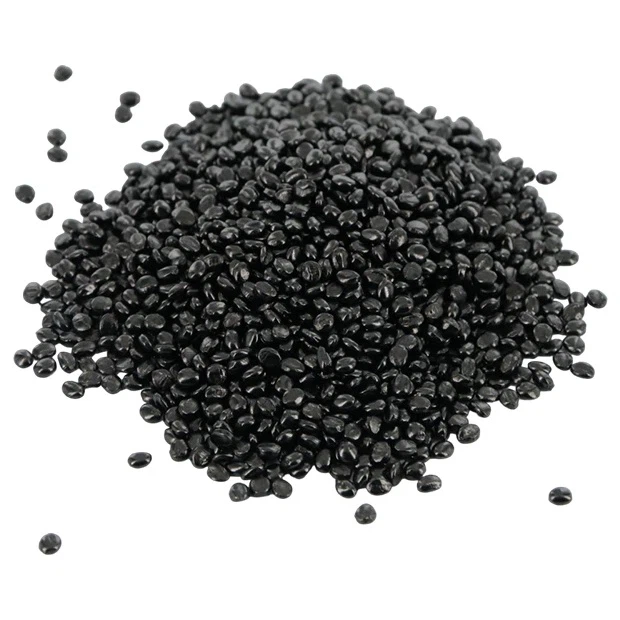
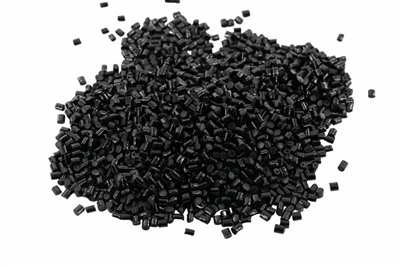

As a supplier of PS black masterbatch, I am often asked about the production process of this essential product. PS black masterbatch is widely used in various industries due to its excellent coloring and performance properties. In this blog, I will delve into the detailed production process of PS black masterbatch.
Raw Material Selection
The first and most crucial step in the production of PS black masterbatch is the selection of raw materials. The primary components include a carrier resin, carbon black pigment, and various additives.
For the carrier resin, we choose polystyrene (PS) that is compatible with the end - use applications. High - quality PS resin ensures good dispersion of the pigment and additives and provides excellent mechanical properties to the final masterbatch. The grade of PS resin is carefully selected based on factors such as melt flow index, molecular weight, and thermal stability.
Carbon black is the key pigment for achieving the black color. We select carbon black with specific characteristics such as particle size, surface area, and structure. Smaller particle size carbon black generally provides better color strength and dispersion, while a high surface area can enhance the blackness of the masterbatch. The structure of carbon black affects its rheological properties and the ease of dispersion in the carrier resin.
Additives are also an important part of the raw material mix. These may include dispersants, antioxidants, lubricants, and heat stabilizers. Dispersants help to break down the carbon black agglomerates and ensure uniform dispersion in the resin. Antioxidants protect the masterbatch from oxidation during processing and use, extending its service life. Lubricants improve the flow properties of the masterbatch during extrusion, while heat stabilizers prevent thermal degradation at high processing temperatures.
Mixing
Once the raw materials are selected, they are carefully weighed and mixed. We use high - intensity mixers to ensure a homogeneous blend of the carrier resin, carbon black, and additives. The mixing process is critical as it determines the quality of the final masterbatch.
The mixing usually starts with the addition of the carrier resin into the mixer. Then, the carbon black is gradually added while the mixer is running at a high speed. The high - speed rotation of the mixer blades creates a shearing force that breaks down the carbon black agglomerates and disperses them in the resin. The additives are added at the appropriate time during the mixing process to ensure their uniform distribution.
The mixing time and speed are carefully controlled to achieve the best results. Over - mixing can lead to excessive heat generation, which may cause degradation of the resin or the additives. Under - mixing, on the other hand, can result in poor dispersion of the carbon black, leading to uneven color and performance in the final product.
Extrusion
After the mixing process, the blended raw materials are fed into an extruder. The extruder is a key piece of equipment in the production of PS black masterbatch. It consists of a barrel, a screw, and a die.
The barrel is heated to a specific temperature to melt the carrier resin. The temperature profile along the barrel is carefully controlled to ensure proper melting and mixing of the materials. The screw in the extruder rotates, pushing the molten material forward through the barrel. As the material moves through the barrel, it is further mixed and homogenized by the action of the screw.
The die at the end of the extruder gives the masterbatch its final shape. Usually, the masterbatch is extruded into strands. The strands are then cooled in a water bath to solidify them. The cooling rate is important as it affects the crystallinity and mechanical properties of the masterbatch.
Pelletizing
Once the extruded strands are cooled, they are fed into a pelletizer. The pelletizer cuts the strands into small pellets of a uniform size. The size of the pellets is carefully controlled as it affects the handling and processing of the masterbatch in the end - user's applications.
The pelletizing process is carried out with precision to ensure that the pellets have a smooth surface and consistent shape. Any irregularities in the pellet size or shape can cause problems during feeding and processing in the customer's equipment.
Quality Control
Quality control is an integral part of the production process of PS black masterbatch. At every stage of production, from raw material selection to pelletizing, strict quality control measures are implemented.
We conduct various tests on the raw materials to ensure their quality and compliance with the required specifications. For example, the carbon black is tested for its particle size, surface area, and carbon content. The carrier resin is tested for its melt flow index, density, and mechanical properties.
The mixed raw materials are also tested for their homogeneity and dispersion quality. This can be done through visual inspection, as well as by using analytical techniques such as scanning electron microscopy (SEM) to examine the dispersion of carbon black in the resin.
The extruded masterbatch is tested for its color, mechanical properties, and thermal stability. Color is measured using colorimeters to ensure that it meets the customer's requirements. Mechanical properties such as tensile strength, elongation at break, and impact strength are tested to evaluate the performance of the masterbatch in the end - use applications. Thermal stability is tested by subjecting the masterbatch to high - temperature conditions and monitoring its weight loss and degradation.
The pelletized masterbatch is also inspected for its size, shape, and appearance. Only those masterbatch pellets that meet all the quality criteria are packaged and shipped to the customers.
Applications of PS Black Masterbatch
PS black masterbatch has a wide range of applications. It is commonly used in the packaging industry for the production of black PS containers, trays, and boxes. The black color provides an aesthetically pleasing appearance and can also offer some protection against light - induced degradation of the packaged products.
In the consumer goods industry, PS black masterbatch is used to manufacture various black plastic products such as toys, electronic device housings, and household appliances. The high - quality black masterbatch ensures a uniform and attractive color, enhancing the marketability of these products.
It is also used in the automotive industry. Black Masterbatch For Automotive is required to meet strict quality and performance standards. PS black masterbatch can be used in interior and exterior automotive parts, providing a durable and high - quality black finish.
In addition, ABS Black Masterbatch and PS Black Masterbatch are often used in combination or separately in different plastic products depending on the specific requirements of the application.

Contact for Purchase
If you are interested in our PS black masterbatch or have any questions about its production process, applications, or quality, please feel free to contact us. We are committed to providing high - quality products and excellent customer service. Our team of experts is ready to assist you in choosing the right masterbatch for your specific needs and to discuss any technical or commercial aspects of your purchase.
References
- "Plastics Additives Handbook" by Hans Zweifel
- "Masterbatch Technology and Applications" by various authors in the plastics industry research community.