


In the realm of plastic manufacturing, polycarbonate (PC) products are renowned for their transparency, high impact resistance, and heat resistance. These properties make them a popular choice in a wide range of applications, from automotive components to electronic devices and consumer goods. However, one crucial aspect that often determines the quality and longevity of PC products is their scratch resistance. As a leading supplier of PC Black Masterbatch, I am frequently asked about how our masterbatch affects the scratch resistance of PC products. In this blog post, I will delve into the science behind scratch resistance in PC products with PC black masterbatch and explore its implications for various industries.
Understanding Scratch Resistance in PC Products
Scratch resistance refers to a material's ability to withstand surface damage caused by friction, abrasion, or contact with sharp objects. In the case of PC products, scratch resistance is particularly important as it can affect the product's appearance, functionality, and overall performance. For example, in automotive applications, scratches on PC headlamp lenses can reduce light transmission and visibility, while scratches on electronic device screens can impair touch sensitivity and readability.
The scratch resistance of PC products is influenced by several factors, including the molecular structure of the PC resin, the presence of additives, and the processing conditions. PC resins have a high degree of molecular entanglement, which gives them good mechanical properties but also makes them susceptible to scratching. To improve scratch resistance, manufacturers often add additives such as silicone, fluoropolymers, or hardeners to the PC resin. These additives can form a protective layer on the surface of the PC product, reducing friction and preventing scratches from forming.
The Role of PC Black Masterbatch in Scratch Resistance
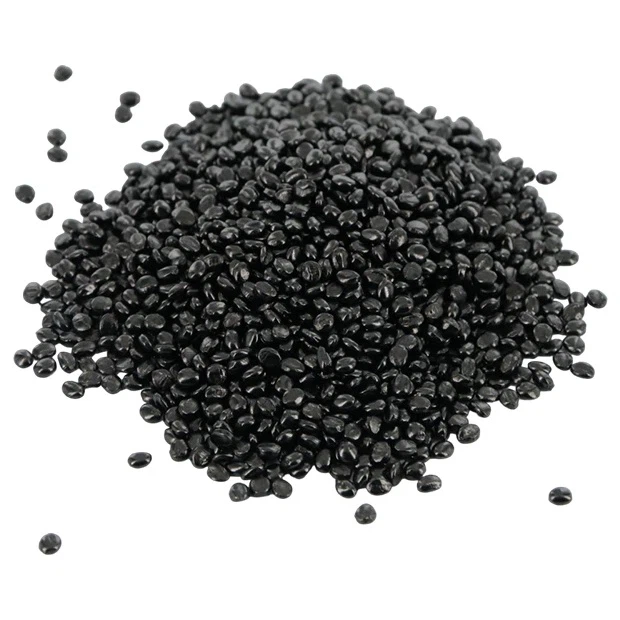
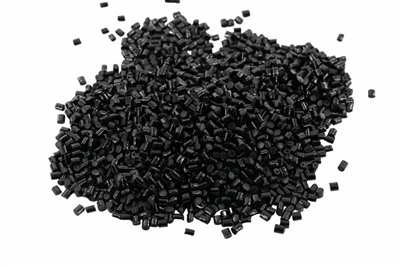
PC black masterbatch is a concentrated mixture of carbon black pigment and a carrier resin, typically PC. It is used to color PC products black, providing them with a sleek and attractive appearance. In addition to its coloring function, PC black masterbatch can also have a positive impact on the scratch resistance of PC products.
One way in which PC black masterbatch can improve scratch resistance is by enhancing the surface hardness of the PC product. Carbon black is a hard and abrasive material, and when it is dispersed evenly throughout the PC resin, it can increase the surface hardness of the product. This makes the PC product more resistant to scratching and abrasion, as the carbon black particles act as a barrier between the surface of the product and the scratching object.
Another way in which PC black masterbatch can improve scratch resistance is by reducing the coefficient of friction of the PC product. The carbon black particles in the masterbatch can form a lubricating layer on the surface of the product, reducing the friction between the product and the scratching object. This makes it easier for the scratching object to slide across the surface of the product without causing damage, thereby improving the scratch resistance of the product.
Factors Affecting the Scratch Resistance of PC Products with PC Black Masterbatch
While PC black masterbatch can improve the scratch resistance of PC products, the degree of improvement depends on several factors, including the type and concentration of the carbon black pigment, the quality of the carrier resin, and the processing conditions.
The type and concentration of the carbon black pigment are important factors that affect the scratch resistance of PC products. Different types of carbon black have different particle sizes, surface areas, and chemical properties, which can affect their ability to improve scratch resistance. In general, carbon black with a smaller particle size and a higher surface area is more effective at improving scratch resistance, as it can provide a more uniform and dense distribution of particles in the PC resin. The concentration of the carbon black pigment also plays a role, as a higher concentration of carbon black can provide a greater degree of scratch resistance. However, too high a concentration of carbon black can also lead to other problems, such as reduced impact resistance and increased brittleness.


The quality of the carrier resin is another important factor that affects the scratch resistance of PC products with PC black masterbatch. The carrier resin should have good compatibility with the PC resin and the carbon black pigment, as well as good mechanical properties and processing characteristics. A high-quality carrier resin can ensure that the carbon black pigment is dispersed evenly throughout the PC resin, providing a uniform and consistent improvement in scratch resistance.
The processing conditions also play a role in the scratch resistance of PC products with PC black masterbatch. The temperature, pressure, and shear rate during the processing of the PC resin can affect the dispersion of the carbon black pigment and the formation of the protective layer on the surface of the product. Optimal processing conditions can ensure that the carbon black pigment is dispersed evenly throughout the PC resin and that the protective layer is formed effectively, providing the best possible scratch resistance.
Applications of PC Products with PC Black Masterbatch
PC products with PC black masterbatch are used in a wide range of applications, where scratch resistance is a critical requirement. Some of the common applications include:
- Automotive Industry: PC products with PC black masterbatch are used in automotive applications such as headlamp lenses, interior trim parts, and dashboard components. The scratch resistance of these products is important to ensure their long-term durability and appearance.
- Electronics Industry: PC products with PC black masterbatch are used in electronic devices such as smartphones, tablets, and laptops. The scratch resistance of the screens and casings of these devices is important to ensure their functionality and aesthetic appeal.
- Consumer Goods Industry: PC products with PC black masterbatch are used in consumer goods such as household appliances, sporting goods, and toys. The scratch resistance of these products is important to ensure their quality and longevity.
Conclusion
In conclusion, the scratch resistance of PC products with PC black masterbatch is an important property that can affect their quality, functionality, and overall performance. PC black masterbatch can improve the scratch resistance of PC products by enhancing the surface hardness and reducing the coefficient of friction. However, the degree of improvement depends on several factors, including the type and concentration of the carbon black pigment, the quality of the carrier resin, and the processing conditions.
As a supplier of PC Black Masterbatch, we are committed to providing our customers with high-quality products that meet their specific requirements. Our PC black masterbatch is formulated using the latest technology and high-quality raw materials to ensure excellent scratch resistance and color stability. We also offer technical support and customization services to help our customers optimize the performance of their PC products.
If you are interested in learning more about our PC black masterbatch or have any questions about scratch resistance in PC products, please do not hesitate to contact us. We would be happy to discuss your needs and provide you with a customized solution.
References
- ASTM D7027 - 18, Standard Test Method for Determining the Scratch Resistance of Polycarbonate Sheet by the Pencil Hardness Test.
- ISO 1518 - 1:2011, Paints and varnishes - Determination of scratch resistance - Part 1: Scratch test by the use of a loaded needle.
- Osswald, T. A., & Menges, G. (2003). Materials Science of Polymers for Engineers. Hanser Gardner Publications.