

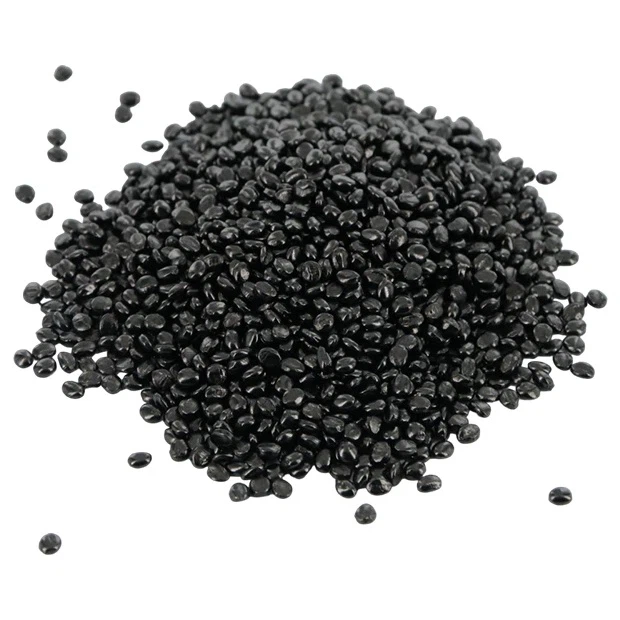
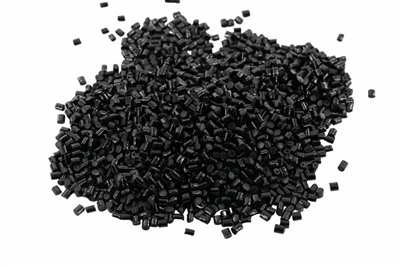

As a supplier of black masterbatch for extrusion, I often encounter questions from customers about the compatibility of our product with different polymers. This topic is crucial as it directly impacts the quality and performance of the final products. In this blog, I will delve into the details of whether black masterbatch for extrusion is compatible with various polymers, exploring the factors that influence compatibility and providing practical insights based on our industry experience.
Understanding Black Masterbatch for Extrusion
Black masterbatch for extrusion is a concentrated mixture of carbon black pigment and a carrier resin. It is designed to impart a deep black color to polymers during the extrusion process. The carrier resin in the masterbatch plays a vital role in determining its compatibility with different polymers. It should have good miscibility with the base polymer to ensure uniform dispersion of the carbon black and consistent color throughout the final product.


Compatibility with Different Polymers
Polyethylene (PE)
Polyethylene is one of the most commonly used polymers in the plastics industry, and it is generally highly compatible with black masterbatch for extrusion. Both high - density polyethylene (HDPE) and low - density polyethylene (LDPE) can easily incorporate the masterbatch. The carrier resin in our black masterbatch is carefully selected to have excellent compatibility with PE. When added to PE during extrusion, the masterbatch disperses evenly, providing a rich black color and maintaining the mechanical properties of the polymer. For example, in the production of Black Masterbatch for Agriculture Film, the black masterbatch is well - integrated with PE, enhancing the film's UV resistance and appearance.
Polypropylene (PP)
Polypropylene is another widely used polymer, and our black masterbatch for extrusion also shows good compatibility with it. However, due to the different molecular structures of PP and PE, some adjustments may be required in the formulation of the masterbatch. The carrier resin needs to be chosen to match the melt flow index and polarity of PP. When used in the production of products such as Black Masterbatch for Pipe, the masterbatch can be evenly dispersed in PP, resulting in pipes with a smooth surface and consistent color.
Polyvinyl Chloride (PVC)
PVC has unique properties, and its compatibility with black masterbatch for extrusion is more complex. PVC is a polar polymer, and the carrier resin in the masterbatch must be selected to be compatible with its polarity. Our R & D team has developed special formulations of black masterbatch for PVC to ensure good dispersion and color stability. In applications like Black Masterbatch for Sheet, the masterbatch can be effectively incorporated into PVC, providing a high - quality black appearance without affecting the sheet's mechanical and chemical properties.
Polystyrene (PS)
Polystyrene is a rigid and transparent polymer. Our black masterbatch can be used with PS, but attention must be paid to the processing conditions. The carrier resin should be able to dissolve and disperse well in the PS matrix. When added during the extrusion of PS products, the masterbatch can transform the transparent PS into a black product with good aesthetics.
Factors Affecting Compatibility
Molecular Structure
The molecular structure of the polymer and the carrier resin in the masterbatch is a key factor in compatibility. Polymers with similar molecular structures are more likely to be compatible. For example, non - polar polymers like PE and PP are more compatible with non - polar carrier resins in the masterbatch. In contrast, polar polymers such as PVC require polar carrier resins for better compatibility.
Melt Flow Index (MFI)
The MFI of the polymer and the masterbatch should be well - matched. If the MFI of the masterbatch is too high or too low compared to the base polymer, it can lead to poor dispersion. During the extrusion process, a significant difference in MFI can cause uneven flow and inconsistent color distribution in the final product.
Processing Conditions
Processing temperature, shear rate, and residence time also affect compatibility. Different polymers have different optimal processing conditions. For example, PVC requires lower processing temperatures compared to PP. If the processing conditions are not properly adjusted, it can affect the dispersion of the masterbatch and the overall quality of the product.
Quality Assurance and Compatibility Testing
As a responsible supplier, we conduct extensive compatibility testing on our black masterbatch for extrusion. Our in - house testing facilities are equipped with advanced instruments to evaluate the dispersion, color stability, and mechanical properties of the final products. We test the masterbatch with various polymers under different processing conditions to ensure that it meets the highest quality standards.
Conclusion
In conclusion, black masterbatch for extrusion can be compatible with different polymers, but it requires careful consideration of factors such as molecular structure, melt flow index, and processing conditions. Our company, as a professional supplier, has the expertise and experience to develop high - quality black masterbatch that is compatible with a wide range of polymers. Whether you are producing agriculture films, pipes, sheets, or other plastic products, our black masterbatch can provide excellent color and performance.
If you are interested in our black masterbatch for extrusion and want to discuss your specific requirements, we welcome you to contact us for further procurement and negotiation. We are committed to providing you with the best solutions and high - quality products.
References
- Plastics Technology Handbook, John Wiley & Sons
- Polymer Science and Engineering, Prentice Hall