

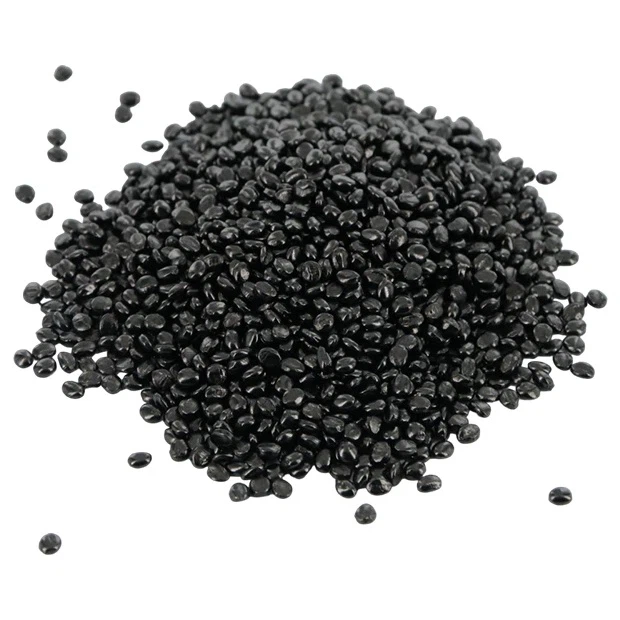
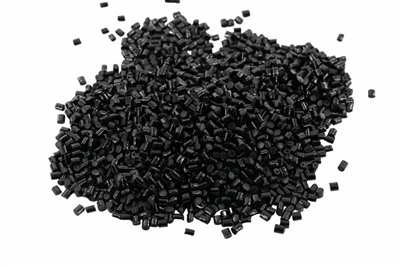

Dispersion performance refers to the ability of black masterbatch to uniformly distribute within the plastic matrix. In the context of food contact applications, this is not just a matter of aesthetics but a critical factor for ensuring product safety and quality. When the black masterbatch disperses well, it forms a homogeneous mixture with the plastic, eliminating the risk of color streaks, spots, or uneven color distribution. This uniformity is essential for food contact plastics as it indicates that the masterbatch is evenly distributed, reducing the likelihood of any local concentration of additives or pigments that could potentially migrate into food.
Factors Affecting Dispersion Performance
Pigment Quality
The quality of the carbon black pigment used in the masterbatch is a fundamental factor. High - quality carbon black has a smaller particle size and a more uniform particle distribution. Smaller particles are more easily dispersed within the plastic matrix because they have a larger surface - to - volume ratio, which allows for better interaction with the polymer chains. For example, carbon black with a primary particle size in the range of 10 - 50 nanometers tends to disperse more effectively than larger - sized particles.
Carrier Resin Compatibility
The carrier resin in the black masterbatch must be compatible with the base plastic resin. Compatibility is determined by factors such as molecular structure, polarity, and melting point. If the carrier resin and the base plastic are not compatible, the masterbatch may not disperse properly, leading to phase separation and poor dispersion. For instance, when using a polyethylene - based carrier resin in a polypropylene base plastic, there may be compatibility issues due to the differences in their molecular structures, resulting in poor dispersion performance.
Processing Conditions
Processing conditions such as temperature, shear rate, and residence time also play a crucial role in dispersion. Higher processing temperatures can lower the viscosity of the plastic, making it easier for the masterbatch to disperse. However, excessive temperatures can cause thermal degradation of the polymer and the masterbatch components. Shear rate, which is generated by the processing equipment such as extruders and injection molding machines, helps to break down the masterbatch agglomerates and distribute them evenly in the plastic. Longer residence times in the processing equipment can also improve dispersion, but this needs to be balanced with the risk of thermal degradation.
Importance of Good Dispersion in Food Contact Applications
Safety Assurance
In food contact applications, good dispersion is directly related to safety. When the black masterbatch is well - dispersed, the potential for the migration of pigments and additives into food is minimized. If there are agglomerates or uneven distribution of the masterbatch, there is a higher risk of local high - concentration areas from which substances could migrate into the food. This is particularly important as any migration of harmful substances can pose a health risk to consumers.
Aesthetic Appeal
Food packaging is often judged by its appearance. Good dispersion of the black masterbatch results in a smooth, uniform color on the surface of the plastic product. This not only enhances the overall visual appeal of the food packaging but also gives consumers confidence in the product's quality. A product with streaks or uneven color may be perceived as of lower quality, even if it is safe from a regulatory perspective.
Product Performance
Uniform dispersion can also improve the mechanical and physical properties of the plastic product. When the masterbatch is evenly distributed, it can enhance the strength, toughness, and barrier properties of the plastic. For example, in food contact stretch films, good dispersion of the black masterbatch can improve the film's tear resistance and oxygen barrier properties, which are essential for maintaining the freshness of the food.
Our Solutions as a Food Contact Black Masterbatch Supplier
As a leading supplier of food contact black masterbatch, we understand the critical importance of dispersion performance. We offer a range of products tailored to different food contact applications, each designed to provide excellent dispersion.
Black Masterbatch For Granulation
Our black masterbatch for granulation is formulated with high - quality carbon black pigments and a carefully selected carrier resin that is highly compatible with a variety of base plastics used in granulation processes. During the manufacturing process, we use advanced compounding techniques to ensure that the carbon black particles are well - dispersed within the carrier resin. This results in a masterbatch that can be easily incorporated into the plastic granules, providing uniform color and excellent dispersion in the final granulated product.
Black Masterbatch for Extrusion
For extrusion applications, our black masterbatch is optimized for high - shear extrusion processes. We have developed a unique formulation that can withstand the high temperatures and shear forces encountered during extrusion. The carrier resin in our extrusion - grade masterbatch has excellent flow properties, which helps in the rapid and uniform dispersion of the carbon black throughout the extruded plastic. This ensures that the extruded products, such as food contact pipes and profiles, have a consistent color and high - quality surface finish.
Black Masterbatch for Strech Film
In the case of stretch films, our black masterbatch is specifically designed to meet the requirements of this application. It is formulated to provide good dispersion in the thin - film manufacturing process. The carbon black particles are carefully selected to ensure that they do not affect the film's stretchability and clarity while providing excellent UV protection. Good dispersion in stretch films also helps to improve the film's mechanical properties, such as puncture resistance and elongation at break.
Conclusion
The dispersion performance of food contact black masterbatch in plastics is a complex but crucial aspect of food packaging and other food contact applications. It is influenced by multiple factors including pigment quality, carrier resin compatibility, and processing conditions. Good dispersion is essential for ensuring safety, aesthetic appeal, and product performance.


As a food contact black masterbatch supplier, we are committed to providing high - quality products with excellent dispersion performance. Our range of products, including Black Masterbatch For Granulation, Black Masterbatch for Extrusion, and Black Masterbatch for Strech Film, are designed to meet the diverse needs of the food contact industry.
If you are interested in learning more about our food contact black masterbatch products or would like to discuss your specific requirements, we invite you to contact us for procurement and further business negotiations. We look forward to working with you to provide the best solutions for your food contact plastic applications.
References
- "Plastics Additives Handbook" by Hans Zweifel.
- "Food Packaging: Principles and Practice" by Donald H. Meridith.
- Research papers on the dispersion of pigments in polymers from academic journals such as Polymer Engineering and Science.